Gesture Recognition Using Data from Smart Rings

Wearable devices are increasingly shifting from wrist-worn formats toward miniaturized and unobtrusive designs. Smart rings, with their discreteness, comfort, and potential for continuous wear, have thus become a growing focus in human–computer interaction research. However, achieving gesture recognition on such platforms is challenging due to extremely limited computation, memory, and power budgets, as well as gesture variability and environmental noise that demand both millisecond-level responsiveness and high accuracy. In a recent research incubation project, a scientific team collaborated with the LimiX team to analyze ring-based sensor data using LimiX-2M, achieving strong performance: 99.37% accuracy, an F1 score of 0.9835, and an AUC of 1.000 on ultra-high-dimensional data. With feature engineering, performance reached its theoretical maximum, with accuracy, F1, and AUC all at 1.0, enabling error-free recognition of all standard gestures and providing substantial support for small-team research and prototyping efforts.
Electricity Price Forecasting
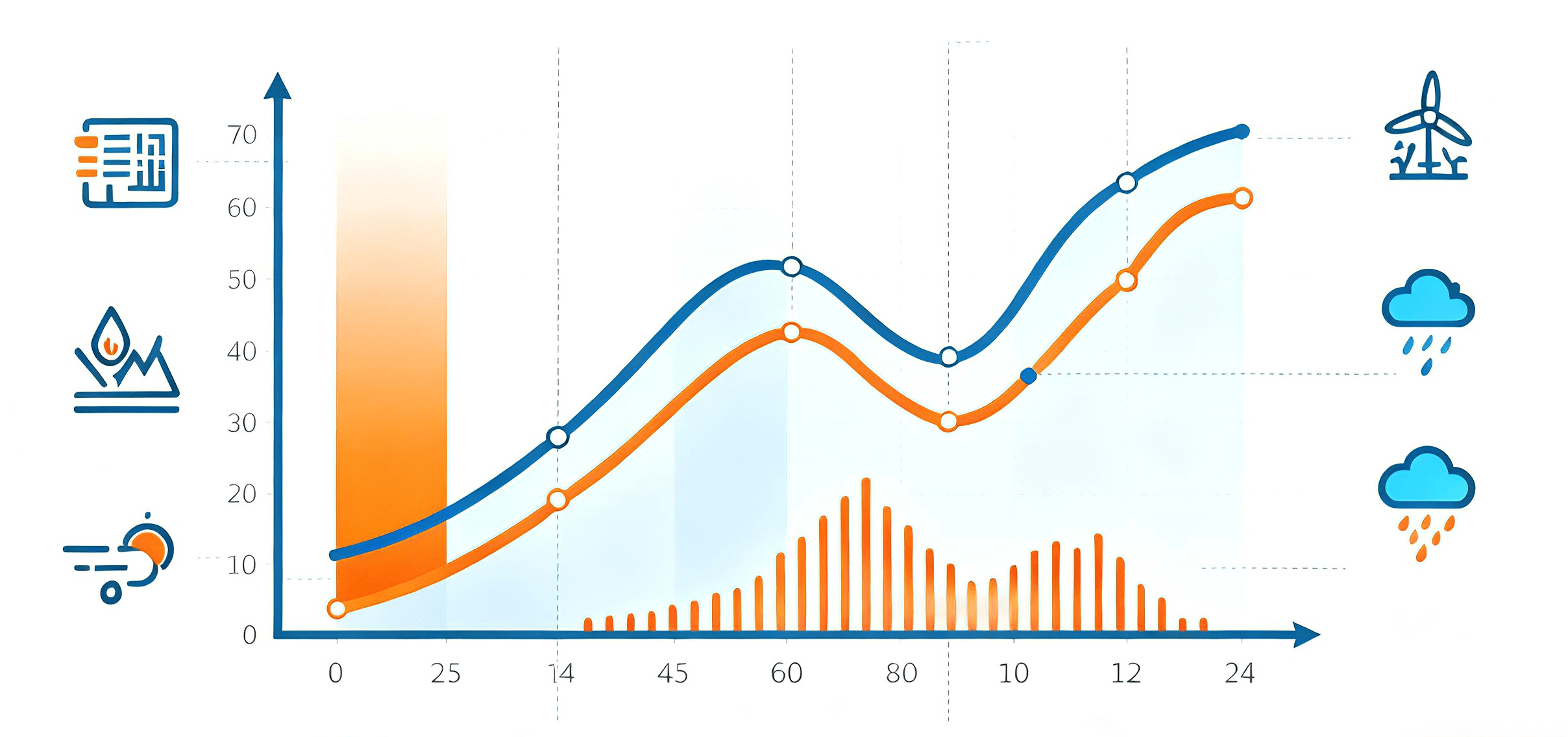
With the advancement of electricity market liberalization, the spot market has become a key platform for power transactions. Unlike traditional planned supply, spot prices fluctuate in real time with supply–demand dynamics, weather conditions, and other factors, often exhibiting significant intraday volatility. While this improves resource allocation efficiency, it also introduces substantial trading risk for electricity-consuming enterprises. Thus, identifying the right time and price for electricity procurement is essential for controlling energy costs and maintaining profitability. To address price volatility, LimiX performs electricity price forecasting by integrating historical prices, generation output, system load, and meteorological data. Using several weeks of observations, LimiX captures complex nonlinear relationships and temporal dependencies. Automated feature extraction further encodes periodic components of the price series, enhancing forecasting accuracy. In a dataset containing 20352 samples and 6 complete features, LimiX reduces forecasting error from 46.93% to 25.27% MAPE compared with the company’s best internal model—a 46.1% improvement—resulting in substantial cost savings in electricity procurement.
Transformer Condition Diagnosis

Transformers are critical components in power transmission and distribution, yet aging equipment, rising loads, and increasingly complex operating conditions heighten their risk of failure. Unplanned outages can disrupt local grids and lead to substantial repair and user-side losses. Traditional maintenance—based on periodic inspections or post-fault repair—offers limited capability for early fault prevention. Winding data contain heterogeneous variables (voltage, current, power) and substantial noise, making conventional modeling approaches less effective. Leveraging large-scale generative pretraining, LimiX exhibits strong robustness to noise and improved extraction of sparse diagnostic features. In a diagnosis task with 3591 samples, 35 features, and an average missing rate of 27.1%, LimiX outperforms the best baseline (XGBoost), increasing accuracy by 7.71% and reducing error rate by 93.5%. By enabling reliable assessment of transformer operating states, LimiX supports dynamic anomaly detection and early risk warning, thereby enhancing maintenance efficiency.
Food Production Process Optimization
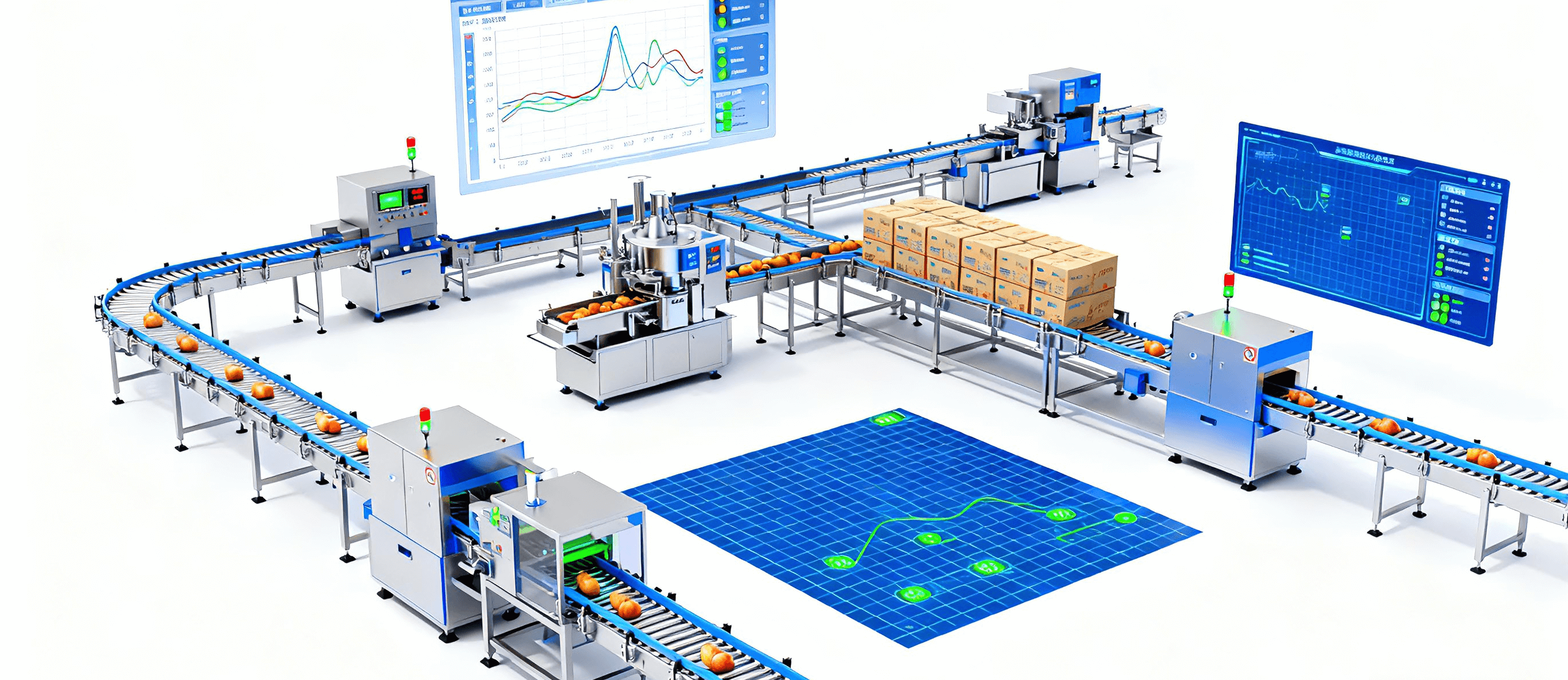
In food manufacturing, the drying stage critically affects product quality: overly high temperatures cause charring, while insufficient drying leaves residual moisture that harms shelf life and texture. Small parameter deviations can reduce batch pass rates, leading to waste and delays. Traditional post-drying inspections detect moisture only after the process is complete, making rework or scrapping unavoidable and offering limited responsiveness to growing quality and cost pressures. The dataset contains 4342 samples and 30 complete features. Leveraging strong contextual modeling, LimiX accurately predicts moisture content from parameters such as airflow rate, burner temperature, and steam ratio, achieving 8.8% MAPE and an R² of 0.92. Its ability to generalize across different process configurations requires no additional fine-tuning. With LimiX, quality control shifts from reactive inspection to real-time prediction and intervention. By integrating process parameter adjustments with moisture forecasts, operators can act during drying rather than afterward, reducing waste and improving pass rates.
Heating-Season Gas Consumption Forecasting
Gas procurement is a recurring challenge for heating companies: insufficient purchases threaten heating performance, while excess purchases tie up capital and may cause financial losses. Because gas consumption depends on diverse building characteristics, population density, insulation levels, historical usage habits, and highly variable weather, simple averages or heuristic estimates are no longer sufficient. To improve procurement decisions, LimiX predicts daily gas consumption using historical sales data, heating system information, and meteorological variables. In tests with 97 samples and 91 complete features, traditional experience-based methods achieve only about 24% MAPE, whereas LimiX reduces MAPE to 7%. This significant accuracy gain helps heating providers better plan supply, reduce waste, and minimize financial risk.
Impurity Level Assessment
In continuous petrochemical production, impurities limit product quality and catalyst life, increasing operating costs. Traditional monitoring relies on delayed lab measurements and empirical rules, often detecting issues only after losses occur. Impurity formation is driven by complex nonlinear interactions among dozens of distillation column variables, making manual monitoring insufficient. LimiX predicts impurity levels using real-time process variables, including reflux flow, bed temperatures and pressures, tail concentrations, and feed steam rates. Tested on 10188 samples with 46 features (0.08% missing), LimiX reduces RMSE from 0.415/0.283 (Random Forest/SVR) to 0.172 and raises R² from 0.765/0.891 to 0.960. This enables early warnings and proactive intervention, extending catalyst life, stabilizing product quality, and reducing energy and material waste.
Prognostics and Health Management
In steel manufacturing, unplanned downtime can cause severe financial losses and safety risks. Traditional maintenance, relying on experience and scheduled inspections, often detects issues only after failures occur. Steel plants generate massive multi-source data, including sensor signals, derived features, and event logs. LimiX integrates these data to dynamically assess equipment health and identify multiple states. Using seven months of data with 52 features (12.69% missing), LimiX improves F1 from 0.553 (best existing model) to 0.812, and fine-tuned reaches 0.949, significantly reducing misclassification and supporting predictive maintenance.
Industrial Production Line Fault Diagnosis
In modern industrial production lines, equipment anomalies often generate error codes that are precise yet difficult to interpret. Multiple codes may point to the same root cause, and the same code can indicate different issues under varying conditions. Maintenance personnel must rely on manuals and trial-and-error troubleshooting, extending downtime. Increasing equipment intelligence further complicates this, as single faults can trigger cascades of related codes, making it hard to identify the core issue. To address this, a company applied LimiX for root-cause analysis. By leveraging contextual information from error codes, LimiX automatically identifies the most likely root cause, significantly improving maintenance efficiency. The dataset contains 19102 samples and 68 features (average missing rate 11.51%). Compared with previous root-cause algorithms, LimiX increases fault identification accuracy by 15.9%.